 |
|
|
Project - International Elephant Project - Sumatra |
|
|
International Elephant Project - Sumatra
InternationalElephantProject.org
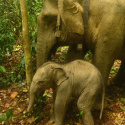 The Sumatran elephant is classified as Critically Endangered on the IUCN Red List. Habitat loss driven by deforestation, agricultural encroachment, and illegal land clearing has fragmented elephant populations across Sumatra, forcing herds into increasingly close proximity with human settlements and farmland. The result is persistent and often dangerous human-elephant conflict: elephants raid crops, damage property, and occasionally injure or kill people; retaliatory killings of elephants by affected communities remain a serious threat to the species' survival. Poaching, including targeted killing of tusked males, compounds the pressure on already small and fragmented populations. The Sumatran elephant is classified as Critically Endangered on the IUCN Red List. Habitat loss driven by deforestation, agricultural encroachment, and illegal land clearing has fragmented elephant populations across Sumatra, forcing herds into increasingly close proximity with human settlements and farmland. The result is persistent and often dangerous human-elephant conflict: elephants raid crops, damage property, and occasionally injure or kill people; retaliatory killings of elephants by affected communities remain a serious threat to the species' survival. Poaching, including targeted killing of tusked males, compounds the pressure on already small and fragmented populations.
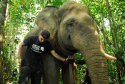 Komunitas untuk Hutan Sumatera has operated the Way Kambas ERU river patrol since September 2019, with IEP support. The ERU is responsible for monitoring and protecting the northern and northeastern sections of Way Kambas National Park, one of the most heavily pressured sections of the park's boundary. Komunitas untuk Hutan Sumatera has operated the Way Kambas ERU river patrol since September 2019, with IEP support. The ERU is responsible for monitoring and protecting the northern and northeastern sections of Way Kambas National Park, one of the most heavily pressured sections of the park's boundary.
During the January to March 2026 reporting period, the ERU conducted 43 field activities over 89 patrol days, covering a total distance of 1,846 kilometres. In addition to elephant monitoring and 25 night patrols along the park border in collaboration with local communities, the team achieved a significant law enforcement milestone: acting on intelligence gathered from a community informant network, ERU rangers participated in the arrest of four poachers across two separate operations in February 2026. The team also detected and removed 20 snare traps across four locations, fought two forest fires covering a combined 226 hectares, documented illegal logging in four locations, and identified four new illegal access paths into the park. Wildlife recorded during the period included eight direct sightings and 15 indirect signs of Wild Sumatran Elephants,
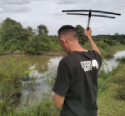 This grant will support the purchase of three telemetry receiver and antenna units. This grant will support the purchase of three telemetry receiver and antenna units.
Two units will go to a team operating in the Langkat district of the Leuser Ecosystem; one unit will go to the river patrol operating in Way Kambas National Park.
Telemetry receivers and directional antennas allow field teams to detect radio signals emitted by collars fitted to individual elephants. When a ranger uses a receiver and antenna in the field, they can determine the direction and approximate distance of a collared elephant, allowing the team to track herd location without needing visual contact. This is particularly critical in dense rainforest where direct sighting is often impossible, and at night when elephants are most likely to approach farmland and settlements. The data gathered via telemetry is used to inform conflict response decisions in real time, to update patrol strategies, and to build the long-term movement databases that underpin IEP's understanding of elephant range and behaviour in these ecosystems.
Rangers need to know the precise, moment-to-moment direction of travel of a herd in order to intervene effectively, and this is what telemetry receivers and directional antennas provide.
|
|
|


